|
As a high school student, Adriana Mariscal ’11 was heavily involved. She was a member of student government, participated in athletics, and volunteered for Best Buddies, a program designed to “help people with intellectual disabilities become part of mainstream society.” Wanting to be every bit as involved at Texas A&M, Adriana dove in with characteristic zeal as soon as she arrived on campus. But college wasn’t high school, and she was in for a culture shock. “I tried to be as involved here as I was there,” she admits ruefully, “but academics took up so much time! I learned you have to pick what you want to do—school and one or two other things. School and four or five other things doesn’t work out so well.” That’s especially true when you’re majoring in genetics. Adriana’s high-school stint with Best Buddies kindled a desire work with children with disabilities and an interest in research that might lead to advancements in the fight against conditions like autism and Down’s Syndrome. She’s aiming for a master’s in genetic engineering, followed by a doctorate in genetics or a related field. No wonder the young woman from San Antonio has to pick her spots when it comes to outside-the-classroom activities!
Never say, “No way!”
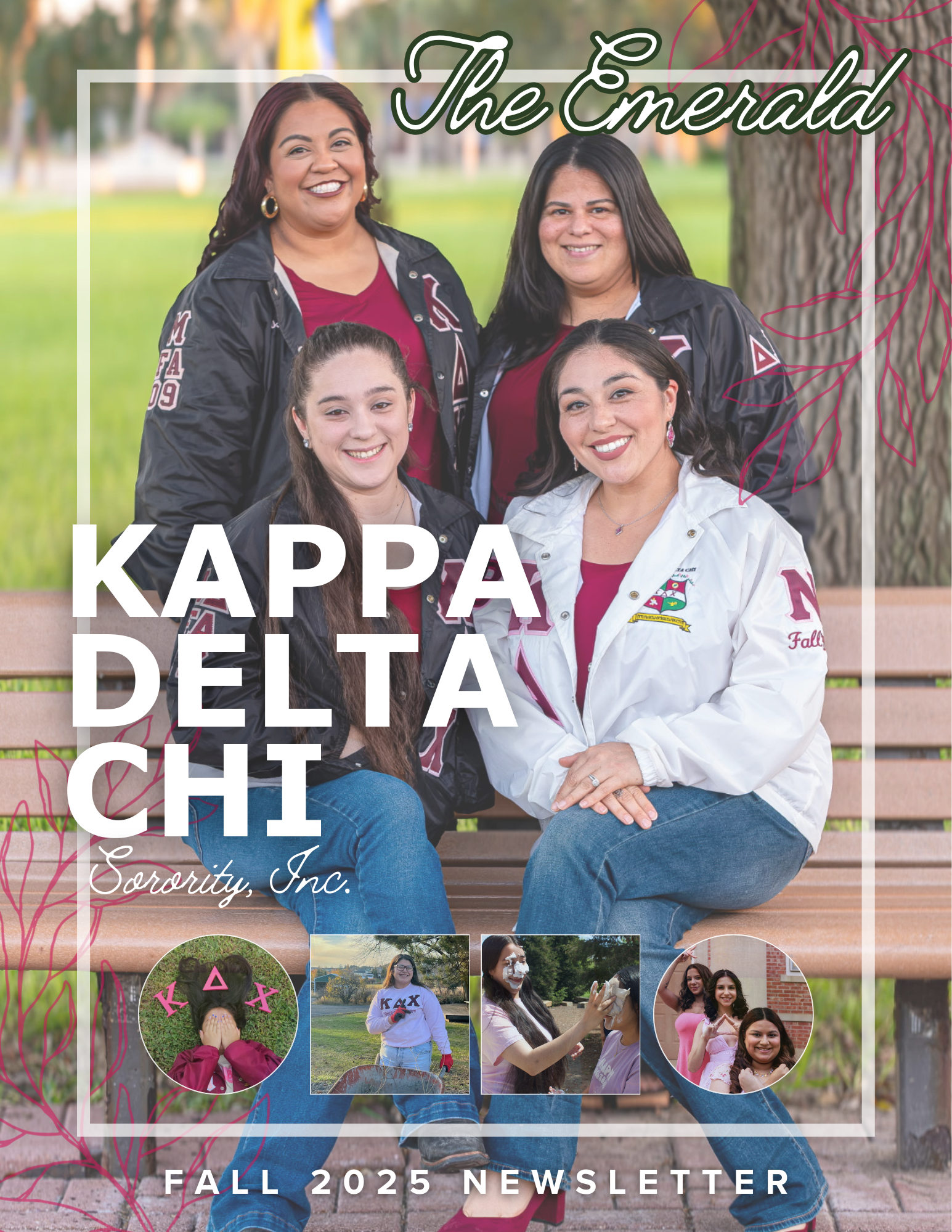
One of the spots Adriana picked was the service-based multicultural sorority, Kappa Delta Chi. Originally Latina founded, the KDChi now describe their multi-ethnic sisterhood as, “Latina founded but multicultural grounded.” Although the sorority is strong in both leadership and academics, the group’s focus on service was the main draw as far as Adriana was concerned. “I grew up in a single-parent household,” she explains, “so my high-school community very definitely had a lot to do with my upbringing. It helped mold me into the young woman I am today. Because of that experience, I believe giving back is essential.” Well, KDChi sisters are all about giving back. Each sister is required to do a minimum of 30 hours of service per semester, but many—including Adriana—do more. Service ranges from Aggie events like Aggie Relay for Life or Replant to events unique to the sorority. The group’s annual Kick the Hell Outta Cancer Kickball Tournament is a case in point: Teams from across campus sign up to play, with all the proceeds going to charity—half to Kappa Delta Chi’s philanthropy, the American Cancer Society, the other half to the winning team’s favorite charity. Other service projects benefit a wide range of organizations, from the Children’s Museum to a home for the elderly to a local food bank.
Now, if you had told Adriana back in high school she would not only join a sorority in college, but serve as the 2009—2010 president of that sorority, she would have laughed in your face.“I would have said, ‘No way! That’s crazy!’” she laughs. “I was always excited about sports. The only thing I knew about being Greek were the stereotypes. I didn’t know the facts—how it really is. It’s more than just partying and wearing your letters.” How much more? Adriana will tell you her sorority helps young women become better leaders, better students, and more well-rounded individuals. Combined with her involvement as a Team Leader in ExCEL—a mentoring program designed to help freshman minority students succeed at Texas A&M—her Greek experience has enabled her to hone her leadership skills, given her improved time-management skills, and helped her develop a professional demeanor. In addition to experience and knowledge gained “on the job,” so to speak, Adriana has been able to take advantage of leadership-development programs like The Greek Journey, sponsored by the Department of Greek Life. Designed to unite emerging leaders from across the Greek community, the Journey emphasizes self-evaluation and works to develop a greater understanding of the foundations and responsibilities inherent in Greek Life. Aggie Greeks complete the Journey by attending an orientation session, spring retreat, and bi-monthly sessions throughout the fall semester. Adriana says she learned a lot from the experience, reaping benefits too numerous to explain.
“It All Goes Hand in Hand”
The way Adriana sees it, these outside-the-classroom activities and what she learns inside the classroom add up to a complete Aggie education. “It all goes hand in hand,” she says. “The University is your academic experience and your outside-the-classroom experience. The time-management and leadership skills I’ve learned through Greeks and ExCEL definitely help me on the academic side. Not only that, but I’m taking Genetics 491, which is a research class that allows us to choose our own research focus. Because of my personal attachments with kids with disabilities through Best Buddies in high school and Project Sunshine here at A&M, I decided to research autism and things like that. But I’m not just reading about those things, I’ve actually had life experiences I can incorporate into my work.”She needs that kind of fully integrated education, she says, in order to continue to meet her goal in life: making a difference. Once she’s completed her schooling, she believes she’ll be able to make a major difference through science. Meanwhile, she works to achieve her goal each and every day by giving back to the community, one person at a time.
For more information on KDChi at Texas A&M, visit the chapter website. If you'd like to explore Greek Life in Aggieland Visit the A&M Student Affairs Website.
Source: Article used with permission from the A&M office of the Vice President for Student Affairs.
Courtesy: Kathy DiSanto, Communications Specialist Original article Link
###
|